
Cylinder Installation Safety Guide
Recently got a gas cylinder for your home, and not sure how to install it? Or maybe you had one but need to replace it in time for your summer BBQs. It’s important that when you are installing or replacing a gas cylinder, you give it your full attention to safety to prevent leaks, fire hazards or damage to your equipment.
We are going to walk you through it step by step so you can be sure your gas cylinder is installed safely.
For our full Cylinder Installation Safety Guide, see here.
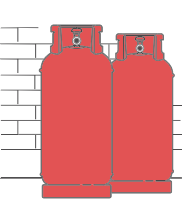
1. Cylinder storage and positioning
Storing and positioning your gas cylinder is an important part of keeping your home safe and making sure everything works as it should. As cylinders contain gas under high pressure, placing them in the wrong spot, such as a cramped or poorly ventilated area, can increase the risks of leaks or pressure build-up. By following our easy storage and positioning guidelines, you can reduce risks and handle your gas cylinder safely and with confidence.
- Propane cylinder(s) shall be positioned outdoors.
- All cylinder(s) shall be stored on a flat, stable surface.
- Always store and use cylinder(s) upright, with the valve at the top.
- Ensure the storage area is well-ventilated and away from heat and ignition sources.
- Keep the valve protection cap fitted when cylinder(s) are not connected.
- Protect cylinder(s) from damage, impact, or dropping.
By following this guide, you’ll be able to store and position your gas cylinders safely while reducing the risk of leaks, damage, or accidents. Taking extra care goes a long way in keeping everything running smoothly. Always handle cylinders with care and refer to manufacturer instructions to maintain a safe and reliable gas supply.
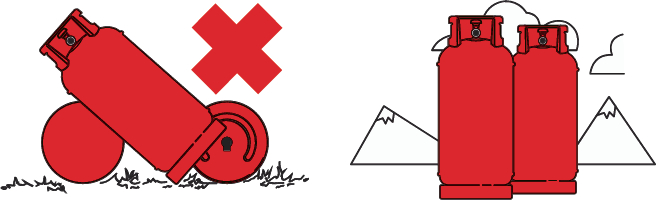
2. Before disconnecting cylinders
Before disconnecting your gas cylinder, make sure all valves are fully closed Fellow appliances are turned off. There are two types of cylinders: hand wheel and self- closing – follow the right steps for your specific type.
Hand wheel operated cylinder valves
Before disconnecting:
- Ensure the valves on all cylinder(s) to be replaced are fully closed.
- Where all cylinders have run to empty ensure all appliances are turned OFF
- On a multiple cylinder installation, where a change-over (C/O) device is fitted: Ensure it is set or pointing to the (‘service’) cylinder side, in accordance with the manufacturer’s instructions, before disconnecting or replacing any cylinder(s).
Note: The ‘service’ side refers to the cylinder(s) currently supplying gas to the installation.
Self-closing cylinder valve:
Clip on Type Regulator used with (e.g. patio heaters, cabinet heaters, gas cookers & hobs)
- Ensure that the appliance is turned off, and regulator valve is switched OFF before disconnecting from the cylinder add clip on regulator image.
These guidelines allow you to safely disconnect your gas cylinder. Taking the time to carry out these steps carefully will help prevent gas leaks, protect equipment, and keep you safe whilst disconnecting your gas cylinder.
3. Connecting Cylinders
Before connecting the regulator, it’s a good idea to do a quick safety check to make sure your cylinder is in good working condition. Taking a moment to check everything can help prevent issues and give you peace of mind.
There are two main types of cylinders: hand wheel and self-closing, so be sure to follow the guide that matches your cylinder type for the safest results.
Hand wheel operated cylinder valves:
- Ensure hoses, regulators, and associated equipment are in good condition.
- Check that all sealing washers are in good condition.
- On a multiple cylinder installation, where a change-over (C/O) device is fitted or where all cylinders have run to empty, ensure all appliances are turned OFF before restoring supply
Clip on type Regulator:
Before connecting regulator check that the cylinder valve, seals, hoses, regulator and associated appliance(s) are in safe working condition
Following these guidelines and ensuring all parts are in safe working condition will help provide a safe, secure connection and reliable operation of your gas system.
4. Checking for Leaks
After you have safely connected the gas cylinder and restored the gas supply, it is important to carry out a leak check to ensure all connections are secure and operating safely. Follow our guidelines on how to safely check for gas leaks and what you should to if a leak is detected.
- After connecting and restoring supply check all joints using an approved leak detection fluid or spray, if bubbles appear:
- Turn OFF all cylinder valves immediately add image 3
- Contact your Gas Supplier or a Registered Gas Installer
- ROI users contact a Registered Gas Installer (RGI)
- NI users contact a Gas Safe Engineer
Following these guidelines ensures the safety of both you and your property. Please do not attempt to solve the leak yourself and contact the relevant person listed above if you spot a leak.
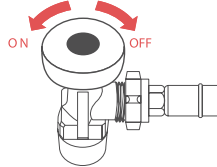
5.Hoses & Regulator - Inspection and Replacement
Before connecting or replacing your gas cylinder, it’s important to carry out a few simple checks and routine maintenance to make sure everything is safe and in good working order. Taking a little time to do this can help prevent problems and keep your setup running smoothly. Follow the guidelines below to confidently inspect and replace your gas cylinder the right way.
Before connecting or replacing cylinders:
- Check the condition of:
- Pressure regulator & assemblies.
- Hoses and manifolds.
- Sealing washers.
- If any component shows evidence of wear, cracking, damage, or deterioration, do not connect cylinders
- Contact your Gas Supplier or an RGI/Gas Safe registered engineer.
Ongoing maintenance:
- Inspect hoses and manifolds regularly.
- Replace hoses in line with manufacturer guidance (typically every 5 years).
- Replace regulators:
- As specified by the manufacturer, or
- After 10 years in service, whichever occurs first.
- IMPORTANT: ensure the regulator vent is always positioned facing downwards.
- If any component shows wear, cracking, damage, or deterioration, do not use the installation
- Contact your Gas Supplier or an RGI/Gas Safe registered engineer.
- It is recommended that installations and appliances are inspected annually by an RGI/Gas Safe registered engineer.
By following these guidelines and maintenance practices, you can ensure your safety and the safety of your property when inspecting and replacing your gas cylinder.
6. Regulator Upgrade Recommendation (propane cylinder installations)
Gas installations and equipment should meet current safety standards and include the right built-in protections. Following our guide below ensures your system remains compliant and properly protected keeping you and your property safe.
- The gas installation, regulators and assemblies should conform to latest standards, (e.g. IS 813) and industry best practice.
- Where a single-stage pressure regulator is currently installed, consult with an RGI/Gas Safe registered engineer, as it is strongly recommended to be replaced with a model incorporating both, over-pressure and excess flow protection.
Note: Upgrading provides protection against damage to the downstream installation pipework and appliances in the event of regulator malfunction
By following this, you can help ensure your gas installation remains safe, compliant, and protected. Regularly reviewing your system in line with current standards and seeking professional advice where needed will support safe and reliable operation.
7. Installation Safety & Compliance
If you are planning to upgrade your installation, you must make sure that it conforms to current national standards. Please follow our guidelines below to ensure installation safety and national compliance for your gas cylinder:
• To upgrade your installation and ensure it conforms to current national standards:
• Contact an RGI/Gas Safe registered engineer to have a full safety inspection carried out on:
• Installation pipework
• Pressure regulation equipment
• Appliances
• It is recommended that installation pipework and appliances are inspected and certified for continued use by an (RGI) / Gas Safe registered engineer on an annual basis.
By arranging inspections and necessary upgrades with a qualified engineer, you can ensure your installation remains safe, compliant, and fit for continued use, giving you some peace of mind.
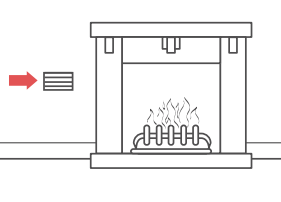
8. If You Smell Gas
If you smell gas, it’s important to stay calm and act quickly to keep everyone safe. Follow our guide below for simple steps you can take to protect yourself, others, and your property.
- Turn off the gas supply at the cylinder(s)
- If Butane cylinder(s) are indoors, remove to well-ventilated outdoor area if safe to do so
- Note: Only Butane (yellow) cylinders are permitted indoors. Propane cylinders must always be stored and or connected outdoors
- Extinguish all naked flames.
- Do not vape or smoke.
- Do not turn electrical switches or appliances on or off (including lights, phones, doorbells).
- Ventilate and evacuate the area.
- Do not use a phone in the area
- Contact your gas supplier or an RGI/Gas Safe registered engineer from a safe place.
- In case of immediate danger, contact emergency services on 999 / 112.
Taking prompt and correct action when you smell gas can help prevent serious harm and ensure the situation is safely resolved.
9. Important note
All inspection, maintenance, and repair work must be carried out by an RGI/Gas Safe registered engineer.
10. RGI and Gas Safe - Jurisdictional Clarification
When we mention a Registered Gas Installer (RGI) or a Gas Safe registered engineer in this guide, we’re simply referring to a qualified gas professional. These terms are used broadly and apply across different regions, so you can feel confident you’re working with someone properly trained and competent.
Republic of Ireland (ROI):
These are referred to as Registered Gas Installers (RGI).
Details of qualified installers can be found below:
Website: www.rgi.ie
Phone: +353 (0)1 499 7998
Northern Ireland (NI):
These are referred to as Gas Safe registered engineers.
Details of qualified installers can be found below:
Website: www.gassaferegister.co.uk
Phone: 0800 408 5500