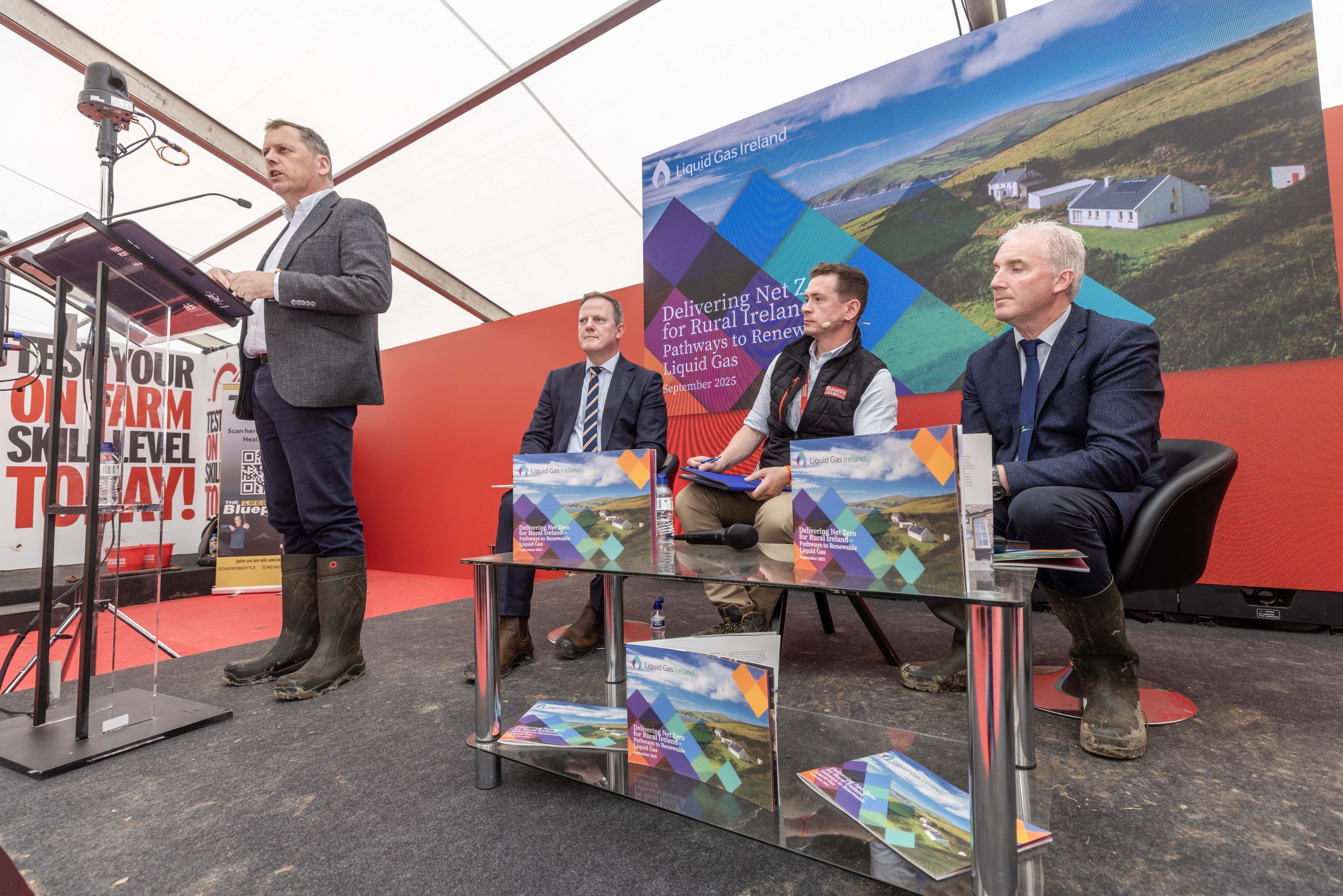
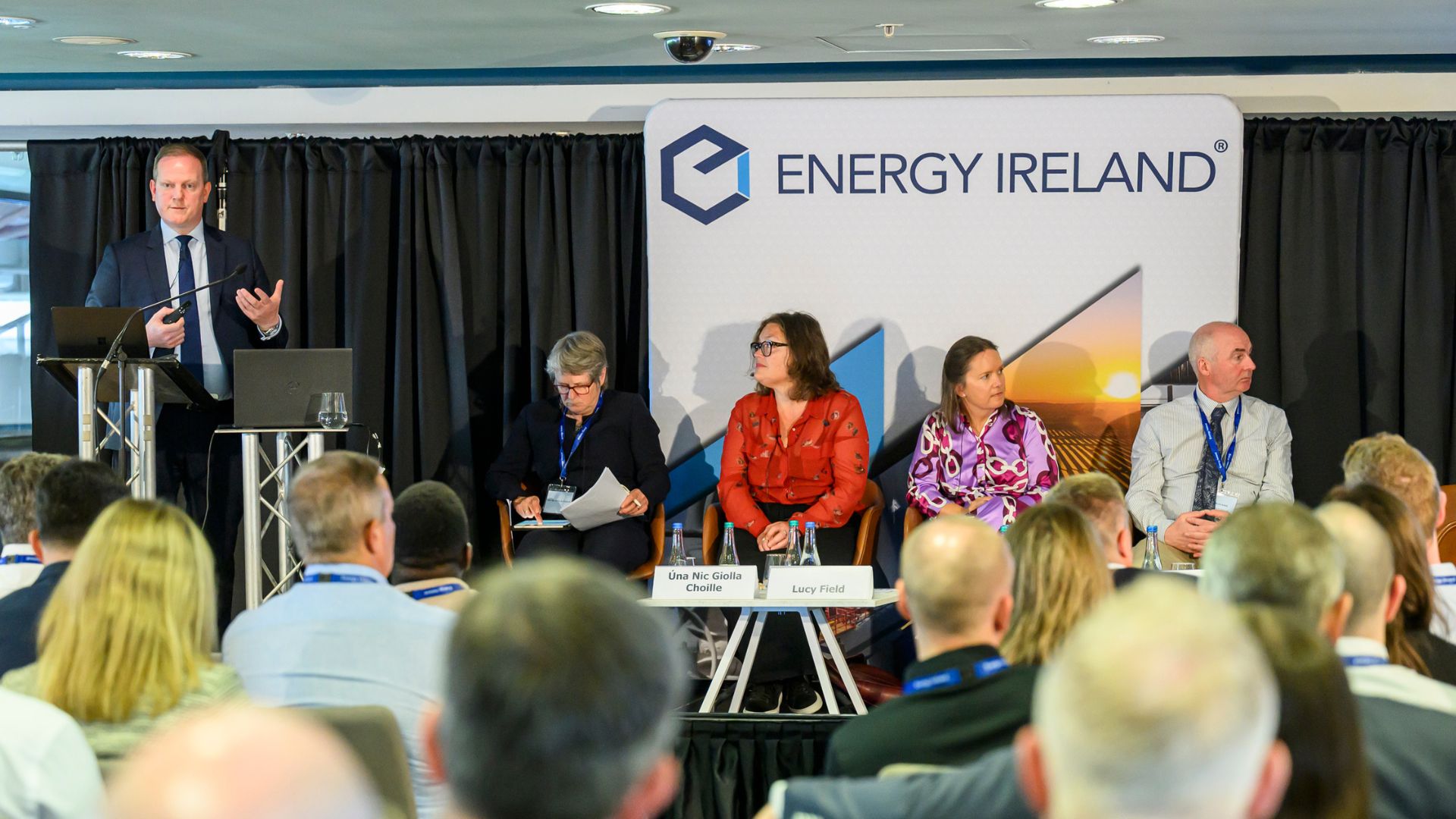
Liquid Gas Ireland (LGI) was pleased to contribute to the Energy Ireland Conference 2026, where Senior Director of Government Affairs and Policy, Alan Farrell, outlined the important role that liquid gas and renewable liquid gases can play in delivering a fair and practical pathway to decarbonising heat, particularly for rural homes and businesses located off the natural gas grid.
Speaking at the conference, Alan emphasised that while heat pumps will play a vital role in Ireland’s energy transition, there is no single technology capable of decarbonising every building. Many homes and businesses off the natural gas grid face significant technical and financial barriers to full electrification, highlighting the need for a more balanced approach to decarbonisation.
Renewable liquid gases, including BioLPG, provide an immediate and practical solution for these consumers. As BioLPG is chemically identical to LPG, it can be introduced through existing heating systems without costly modifications, allowing households and businesses to reduce emissions while transitioning towards lower-carbon energy
Demonstrating practical decarbonisation solutions
The presentation highlighted a number of Irish case studies demonstrating how rural homes and businesses have already incorporated liquid gas and renewable liquid gases into their decarbonisation journey. Examples included Abbey Machinery in Co. Tipperary, Falls Hotel & Spa in Co. Clare, The Shed Distillery in Co. Leitrim, and a residential installation in Co. Meath.
A key message throughout the presentation was the importance of delivering a Just Transition that works for all communities. LGI called for policy and funding mechanisms that provide greater parity between on-grid and off-grid consumers, ensuring rural households and businesses have access to the grants and incentives needed to adopt lower-carbon heating solutions.
Supporting Ireland’s pathway to net zero
Looking ahead, Alan also highlighted the significant opportunity to develop a domestic renewable liquid gas industry to complement the integrated European market. With the right policy framework, Ireland could produce over 100,000 tonnes of renewable liquid gas annually by 2050, strengthening energy security, supporting rural employment and contributing to national climate objectives.
Concluding the presentation, Alan stressed that Ireland’s pathway to net zero should not be framed as a choice between heat pumps and renewable liquid gases, but rather as a mixed technology approach that deploys every credible solution where it is most effective.
“Achieving net zero will depend not only on decarbonising the easiest homes and businesses, but also on providing practical, affordable solutions for those that are hardest to decarbonise.”